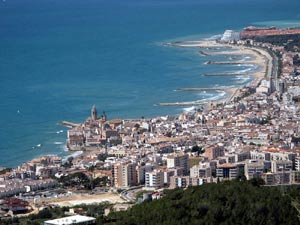
 Sitges (Latin: Blanca Subur), Catalonia, Spain is a small city about 40 kilometers south west of Barcelona renowned worldwide for its Film Festival and Carnival. Between the hills and the sea, it is known for its much-frequented beaches, nightspots, and historical sites.
While the roots of Sitges' artsy reputation date back to the late 19th century, when Catalan painter Santiago Rusiňol took up residence there during the summer, the town really came into its own during the 1960s, when it was the only center for the counterculture on the mainland of Spain (then still under the dictatorship of Francisco Franco), and became known as a sort of "Ibiza in miniature".
Today, Sitges can be considered a dynamic cultural oasis, basing its economy on tourism and culture offering more than 4.500 hotel beds, half of them in four-star hotels. The firm commitment for quality infrastructures has converted Sitges into a first-class destination in terms of tourism of congresses, conferences, seminars and company meetings in the Mediterranean area.
It is also a gay tourist town - in July and August gay men and lesbians visit Sitges as "one of the most popular gay holiday spots in Europe".
Sitges is very international. Almost 35% of the ca. 25.642 inhabitants are from the Netherlands, Great Britain, France and Scandinavia whose children can attend the international school.
Source: 
|