Barcelona is the capital and most populous city of Catalonia and the second largest city in Spain, with a population of 1,605,602 in 2006. It is located on the Mediterranean coast ( 41°23?N, 2°11?E), between the mouths of the rivers Llobregat and Besòs, and is limited to the west by the Serra de Collserola ridge (512 m).
Barcelona is a major economic centre, with one of Europe's principal Mediterranean ports, and its airport is the second largest in Spain. Founded as a Roman city, Barcelona became the capital of the Counts of Barcelona and the Crown of Aragon. Besieged several times during its history, Barcelona is today an important cultural centre and a major tourist destination and has a rich cultural heritage. Particularly renowned are architectural works of Antoni Gaudí and Lluís Domènech i Montaner that have been designated UNESCO World Heritage Sites.
As the capital of Catalonia, Barcelona houses the seat of the Catalan government, known as the Generalitat de Catalunya; of particular note are the executive branch, the parliament and the Supreme Court of Catalonia. The city is also the capital of the county (comarca) of the Barcelonès.
Barcelona is the capital of Catalonia region. It is on the Mediterranean North Coast of Spain, has several beaches, enjoys good and sunny weather. Each area of the city is excellently connected by underground and bus, giving easy access to any site of Barcelona, such as G?ell Park, Sagrada Familia, Montju?ch, the Barceloneta beaches and the Port olympic marina.
Arriving at El Prat Barcelona airport - A convenient train service connects the El Prat airport with Pla?a Catalunya railway station in around 20 minutes. The Airbus is a bus line with frequent services from El Prat airport to Pla?a Catalunya. The bus ride takes around 30 minutes. There is also a direct bus that connects Girona Airport with Barcelona city centre.
Walking in Barcelona is synonymous with La Rambla (or Las Ramblas), that huge road that symbolizes the victory of the pedestrian over the car. Vehicles have to travel along narrow lanes on its edge, squeezed to the corner, while the walking folk progresses like a giant wave in its centre. Las Ramblas is a picturesque and long boulevard that connects the city centre with the Mediterranean Sea and the marina. Las Ramblas is always full of live performances and shows, drawing artists and flower shops. Along the street, you'll find vendors of all sorts.
The main square of Barcelona is Pla?a Catalunya. It is a good starting point for a tour of the city, because here are all forms of public transport: underground, bus and train stations.
A major thoroughfare is Gran Via De Les Corts Catalanes, a tree-lined avenue that crosses the city centre. Another main avenue in Barcelona city centre is Avinguda Paral.lel (Parallel Avenue), going all the way to the marina. Diagonal Avenue is also a long road that crosses Barcelona city until it gets to the sea. In Diagonal Avenue are elegant shops and large companies' offices; its area is packed with discotheques, pubs and bars, and well conveys the Barcelona night flavour. Via Laietana is a long street also connecting the city centre to the marina and Barceloneta beach.
Visitors to Barcelona can escape from the hustle and bustle of the city by visiting two parks: Parc G?ell and Parc del Guinard?.
The Museu Picasso, in Carrer de Montcada 15-23, is closed on Mondays, and entry costs about 3 pounds. It doesn't actually contain Picasso's world-famous masterpieces, but it's still interesting for displaying hundreds of drawings that the Master created early in the development of his art.
Barcelona's most admired building is probably Antonio Gaudi's gigantic, half-built Sagra Familia church. It's open every day, and costs about 5 euros to visit.
In districts like Gracia, streets are crowded all night until sunrise. On Saturday nights, people usually meet in a cafe at 10pm, go to a restaurant at 11pm, then walk to a bar at 1am, and finally to a club around 3am. Nobody goes to sleep until 6 in the morning.
Barcelona has some of the best sports venues in the world. Its huge stadium, Campo Nou, is not in the outskirts, as it generally happens, but within the city. Inside the stadium, the architecture does not intimidate or distract from the main scene on the pitch.
Click Barcelona Hotels
Barcelona - Spain, the capital of Catalonia on the shores of the Mediterranean is a modern, cosmopolitan city, but still has respect for its past and its traditions, and folklore is part of the everyday lives of Barcelona inhabitants, who are also great lovers of art and culture, and music always takes centre stage during every celebration. They celebrate their popular festivals with passion and engage in them wholeheartedly. Discount hotels in Barcelona Spain Barcelona hotel accommodation reservations service, Spain Welcome to Click Barcelona hotels. Barcelona - Spain, the capital of Catalonia.
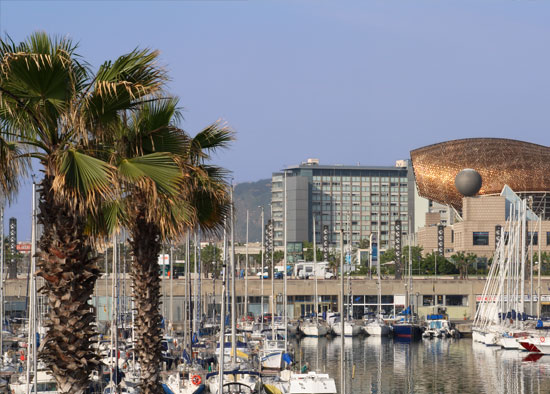
Class : No of rooms : 291 City : Barcelona Address : Moll de Barcelona WTC, s/n - Edificio Oeste - 08039
Mediterranean air, avant-garde art, and a soft sea breeze prevail at the privileged facilities of the five-star Eurostars Grand Marina GL , THE RAMBLAS , hotel located in the World Trade Center leisur
more
...
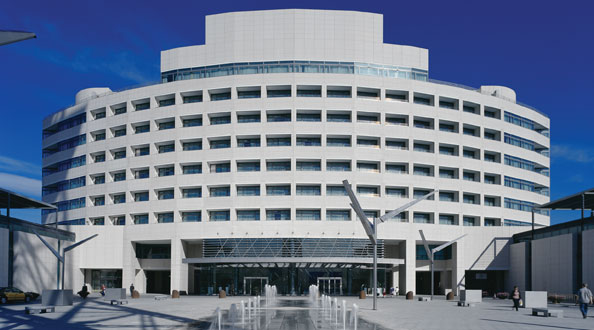
Class : No of rooms : 314 City : Barcelona Address : Avda. Sarriá 50
Luxurious hotel situated in the most modern area of Barcelona next to the new shopping center and just 10 minutes from the airport. Enjoy the comfortable surroundings of the 300 functionally decorated
more
...
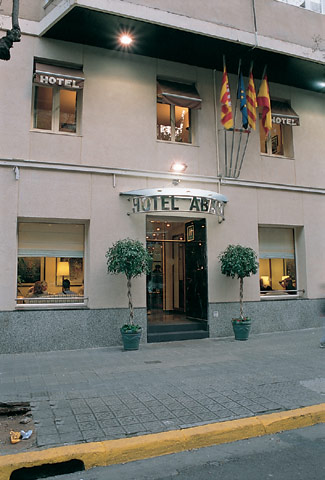
Class : No of rooms : 40 City : Barcelona Address : Travesera de Gracia 380-384
The Medium Abalon hotel is a charming establishment located very close to the Sagrada Familia (Holy Family Church), one of the city's marvels of Modernism. It offers spacious rooms with all comforts a
more
...
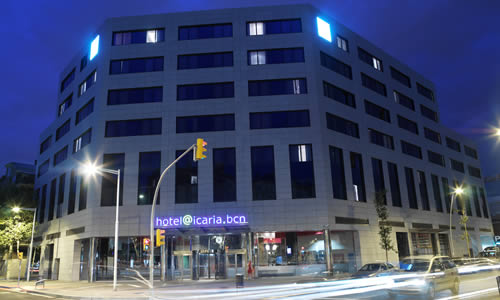
Class : No of rooms : 180 City : Barcelona Address : Avinguda Icaria 195 - Avenida Icΰria, 195 · Villa Olνmpica · 08005 Barcelona
Newly opened hotel, located in the quietest and safest neighborhood of Barcelona, just one block away from the beaches, and only two metro stops to the city center.
Enjoy our big rooms, in a hotel wi
more
...

 Barcelona is the capital and most populous city of Catalonia and the second largest city in Spain, with a population of 1,605,602 in 2006. It is located on the Mediterranean coast ( 41°23?N, 2°11?E), between the mouths of the rivers Llobregat and Besòs, and is limited to the west by the Serra de Collserola ridge (512 m).